Have you ever wondered If omelette or omelet is the correct spelling? Both spellings are correct, and both refer to the same dish made from beaten eggs cooked in a pan.
The main difference is regional: omelet is the standard spelling in American English, while omelette is more common in British English.
This spelling difference often confuses students, English learners, writers, and anyone preparing content for an international audience. You may see omelet on an American restaurant menu and omelette in a British cookbook. Neither spelling is wrong. However, choosing the right version for your audience can make your writing clearer and more consistent.
The word also appears in recipes, food blogs, restaurant menus, newspaper articles, and everyday conversations. Knowing which spelling to use can help you avoid unnecessary corrections and follow the style of your chosen region.
In this guide, you will learn the meanings, origins, and regional differences between omelette and omelet. You will also find practical writing advice, common mistakes, everyday sentences, and answers to frequently asked questions. By the end, you will know which spelling works best for your readers.
Omelette or Omelet: Featured Snippet Answer
Omelette and omelet are both correct spellings for a dish made from beaten eggs cooked in a pan. Omelet is the preferred spelling in American English, while omelette is more common in British English and many other English-speaking regions. Choose the spelling that matches your audience, and use it consistently throughout your writing.
Omelette or Omelet: Quick Answer
Both omelette and omelet are correct. They have the same meaning, pronunciation, and general use. The difference is mainly a matter of regional spelling.
- Omelet: Preferred in American English.
- Omelette: Preferred in British English and commonly used in many international food contexts.
Example: American English: “I ordered a cheese omelet for breakfast.”
Example: British English: “I ordered a cheese omelette for breakfast.”
Both sentences are correct. The spelling changes, but the dish remains the same.
If you are writing for an American audience, choose omelet. For a British audience, choose omelette. For international content, either can work, provided you use one form consistently.
What Does Omelette or Omelet Mean?
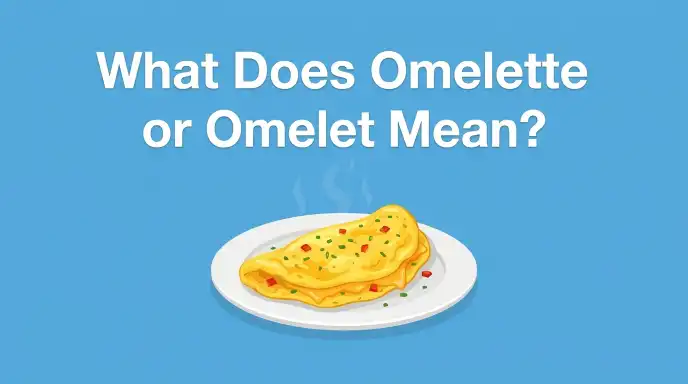
An omelette, also spelled omelet, is a dish made by beating eggs and cooking them in a pan. Cooks may fold the eggs over a filling or serve them flat, depending on the recipe and cooking style.
Common fillings and toppings include:
- Cheese
- Mushrooms
- Onions
- Tomatoes
- Peppers
- Spinach
- Ham or other cooked meats
- Fresh herbs
The dish can be simple or include several ingredients. Some people enjoy a plain egg omelet, while others prefer a cheese and vegetable omelette.
Is There a Difference in Meaning?
No. In ordinary English, omelette and omelet mean the same thing. Neither spelling refers to a different recipe or cooking method.
The choice depends mainly on regional spelling conventions and the publication’s style guide.
Example: “She made an omelet with cheese and mushrooms.”
Example: “She made an omelette with cheese and mushrooms.”
Both sentences describe the same type of meal.
How Is the Word Used?
The word is most often used as a noun. It appears in cooking instructions, restaurant menus, food reviews, and conversations about meals.
For instance, a recipe might tell you to beat two eggs, heat a little butter in a pan, and cook the mixture until it sets. You can then add your chosen filling and fold the eggs over.
The spelling does not change how you prepare or serve the dish.
The Origin of Omelette or Omelet
The word omelette comes into English through French. The French word omelette refers to a dish made from eggs cooked in a pan.
The word has a longer linguistic history, with earlier French forms linked to the development of the modern term. Its deeper origin is not entirely certain, so it is best to avoid assigning it a single definite source without strong historical evidence.
English adopted the French spelling omelette. Over time, English speakers also used the shorter form omelet, especially in American English.
Why Are There Two Spellings?
English spelling varies by region. Words sometimes keep their original-looking forms in one variety of English while developing shorter or different forms in another.
In this case, American English generally favors omelet, while British English commonly retains omelette. Both forms have become established, so neither is simply a misspelling.
This is similar to other regional spelling differences, such as color and colour or favorite and favourite. However, not every spelling difference follows the same pattern, so it is always worth checking a reliable dictionary when in doubt.
British English vs American English
The main difference between omelette and omelet is the spelling preferred in each region. The meaning remains the same.
| British English | American English | Example |
| Omelette | Omelet | She made a cheese omelette. / She made a cheese omelet. |
| Omelette recipe | Omelet recipe | Try this easy omelette recipe. / Try this easy omelet recipe. |
| Mushroom omelette | Mushroom omelet | He ordered a mushroom omelette. / He ordered a mushroom omelet. |
| Vegetable omelette | Vegetable omelet | We served a vegetable omelette. / We served a vegetable omelet. |
| French omelette | French omelet | The chef prepared a French omelette. / The chef prepared a French omelet. |
British English Usage
In British English, omelette is the more common spelling. It appears in cookbooks, restaurant menus, food magazines, and everyday writing.
If you are writing an article for readers in the United Kingdom, omelette is usually the safest choice.
American English Usage
In American English, omelet is the preferred spelling. It is common in American dictionaries, recipes, menus, and food-related publications.
For a US audience, use omelet unless you are quoting a source or following a style guide that specifies another form.
What About Dictionaries and Style Guides?
Major dictionaries recognize the spelling variation. However, individual publishers, newspapers, and websites may follow their own editorial rules.
If you are writing for a particular publication, check its style guide first. When no specific rule applies, follow the spelling commonly used by your target audience.
Omelette or Omelet: Which Version Should You Use?
The best spelling depends on where your readers live and which variety of English your content follows.
United States
Use omelet in American English. This is the preferred form for most US-focused recipes, restaurant descriptions, educational content, and food blogs.
Example: “This easy omelet takes less than ten minutes to prepare.”
United Kingdom
Use omelette in British English. It is the usual choice for British recipes, menus, and general writing.
Example: “This cheese omelette is perfect for a quick lunch.”
Canada
Canadian English can show variation in spelling, and both forms may appear. Check the dictionary or editorial style guide used by your publisher. For a Canadian publication, consistency matters more than switching between spellings.
Australia
Omelette is a familiar and widely used spelling in Australian English. For Australian readers, it is generally a suitable choice. Follow the house style of a publication if it specifies a preferred form.
International Writing
For a global audience, either spelling is acceptable. However, choosing one form and using it throughout the same article makes the text easier to follow.
If your website mainly serves American readers, use omelet. If it mainly serves British or other audiences that commonly use omelette, choose that form.
Academic Writing
Academic writing should follow the spelling rules of the required style guide or institution. A paper about food, language, or cooking should not switch between omelet and omelette without a clear reason.
If you quote a source, preserve the source’s original spelling.
Business Writing
For restaurant menus, food product descriptions, catering proposals, and marketing materials, use the spelling that matches your market.
A US restaurant would normally write “Vegetable Omelet,” while a British restaurant would commonly write “Vegetable Omelette.”
The rule is simple: Match your audience, follow your style guide, and stay consistent.
Common Mistakes
People sometimes assume that one spelling is correct and the other is wrong. That is the main mistake to avoid. Both forms are accepted English spellings, but their regional use differs.
| Incorrect or inconsistent usage | Better usage | Explanation |
| Calling omelette wrong in every context | Recognize both spellings | Both forms are correct. |
| Calling omelet an American spelling error | Use omelet for US English | It is the standard American form. |
| Calling omelette a British spelling error | Use omelette for British English | It is the common British form. |
| Switching spellings in one article without a reason | Choose one spelling and keep it | Consistency improves readability. |
| Using a regional spelling that conflicts with a publication’s rules | Follow the required style guide | Publishers may set their own preferences. |
How Can You Remember the Difference?
Use this simple memory tip:
- US audience: Omelet.
- UK audience: Omelette.
Think of omelet as the shorter American spelling. The longer omelette is common in British English.
Remember that this is a regional preference, not a strict rule that makes the other spelling incorrect.
Omelette or Omelet in Everyday Examples
Both spellings work in everyday writing. The following sentences show how to use them in different situations.
Emails
Example: “Hi Sarah, would you like an omelet for breakfast before our meeting?”
Example: “I found a new omelette recipe that we could try this weekend.”
Choose the form that matches the spelling convention you use in the rest of the email.
Business Writing
Example: “Our restaurant now offers a spinach and cheese omelet.”
Example: “The breakfast menu includes a fresh vegetable omelette.”
Restaurants should match the spelling to their main market and brand style.
News Headlines
Example: “Local Café Adds New Omelet to Its Breakfast Menu”
Example: “Chef Shares the Secret to a Perfect Omelette”
A publication may use either spelling, depending on its regional style.
Blogs
Example: “How to Make a Fluffy Omelet at Home”
Example: “Five Easy Fillings for Your Next Omelette”
Food bloggers should consider their readers’ location when choosing the main spelling for a post.
Social Media
Example: “Starting the morning with a cheesy omelet!”
Example: “Fresh herbs make this homemade omelette even better.”
Both versions are suitable for captions and posts. Keep your spelling consistent if you are building a series of recipes.
Academic Writing
Example: “The recipe describes a traditional French omelette.”
Example: “The American cookbook uses the spelling omelet.”
In academic work, use the spelling required by your style guide. When discussing the spelling difference itself, you can mention both forms.
Daily Conversation
Example: “Would you like an omelet with your toast?”
Example: “I usually order a mushroom omelette for brunch.”
People may use either form when speaking or writing. The difference is more noticeable in spelling than in meaning or pronunciation.
Google Trends and Modern Usage
Both omelette and omelet remain in modern English. Their use reflects regional spelling habits, food culture, and the wording people encounter on menus, recipe websites, and cooking shows.
The American spelling omelet is a natural choice for US-focused recipes. The British spelling omelette is common in UK-focused cooking content and appears in many international food contexts.
Why Do People Search for Omelette or Omelet?
Readers often search for this comparison because they want to know:
- Which spelling is correct.
- If omelet is American English.
- If omelette is British English.
- Which spelling to use in a recipe or restaurant menu.
- If the two words have different meanings.
- Which spelling is best for school or professional writing.
These questions are common whenever English has more than one accepted spelling for the same word.
Which Spelling Is More Popular?
Popularity depends on the country, the audience, and the type of content being measured. Search interest may also change with food trends, recipe searches, and seasonal cooking habits.
No live Google Trends figures have been checked for this article. Therefore, it would be misleading to claim exact search volumes, percentages, or country rankings.
For practical writing, you do not need a search-volume figure to make the spelling choice. Use omelet for standard American English and omelette for standard British English. If you are planning content, compare both terms in Google Trends and your keyword research tool for the specific countries you want to reach.
Tip for Food Writers
If your article targets a US audience, use omelet naturally in the title, headings, and recipe text. For a UK audience, use omelette.
You can mention the alternative spelling once where it helps readers understand the difference. Avoid repeating both words unnaturally just to target more searches.
Quick Comparison Table
| Version | Meaning | Correct? | Region | Example |
| Omelet | A dish made from cooked eggs | Yes | Mainly American English | I made a cheese omelet. |
| Omelette | A dish made from cooked eggs | Yes | Mainly British English | I made a cheese omelette. |
| Omelet recipe | Instructions for making the dish | Yes | US-focused content | This omelet recipe is simple. |
| Omelette recipe | Instructions for making the dish | Yes | UK-focused content | This omelette recipe is simple. |
| French omelet | A French-style egg dish | Yes | American spelling | The chef made a French omelet. |
| French omelette | A French-style egg dish | Yes | British spelling | The chef made a French omelette. |
Key Takeaways
- Omelette and omelet are both correct spellings.
- Both words describe the same egg dish.
- Omelet is the preferred spelling in American English.
- Omelette is more common in British English.
- Canada and Australia may show variation, so check local usage and the relevant style guide.
- Neither spelling is universally wrong.
- Choose the version that fits your audience and use it consistently.
Frequently Asked Questions
Q1. Is omelette or omelet correct?
Both spellings are correct. Omelet is the preferred spelling in American English, while omelette is more common in British English. Both words describe the same dish made from beaten eggs cooked in a pan. Choose the spelling that matches your audience or publication’s style guide.
Q2. Is omelet American or British?
Omelet is the standard American English spelling. American recipes, menus, and food publications commonly use this shorter form. British English generally prefers omelette. If you are writing for a US audience, omelet is usually the best choice.
Q3. Is omelette British English?
Yes, omelette is the more common spelling in British English. It is widely used in British recipes, restaurant menus, and general writing. However, it is not exclusive to the United Kingdom. The spelling also appears in other English-speaking regions and international food writing.
Q4. Do omelette and omelet mean the same thing?
Yes. The two words have the same meaning and refer to the same general dish. The difference is spelling, not the ingredients or cooking method. A cheese omelet and a cheese omelette can describe the same meal.
Q5. Which spelling should I use in a recipe?
Use omelet if your recipe targets American readers. Use omelette if you are writing for British readers. If your audience is international, either form can work. Pick one spelling and use it consistently throughout the recipe, headings, and related content.
Q6. Which spelling is used in Canada?
Both spellings may appear in Canadian English. The best choice depends on the publication, audience, and style guide. If you are preparing content for a Canadian newspaper, cookbook, or business, check its editorial preferences before deciding which form to use.
Q7. Is omelette spelled with one T or two?
The spelling omelette has two letters t at the end before the final e: o-m-e-l-e-t-t-e. The American spelling omelet has one final t and no final the sequence. Both forms are correct in their usual regional contexts.
Q8. How do you pronounce omelette and omelet?
The two spellings generally have the same pronunciation in English, although accents may vary. The spelling difference does not normally create a difference in meaning or spoken use. If you are unsure, check an audio pronunciation in a trusted dictionary.
Conclusion:
The choice between omelette or omelet is simple once you understand regional English spelling. Both words are correct, and both describe the same dish made from cooked eggs. The main difference is where each spelling is most commonly used.
For American readers, omelet is the preferred form. For British readers, omelette is usually the better choice. In Canada, Australia, and international writing, check your audience’s expectations or follow the style guide of the publication you are writing for.
You do not need to change a recipe or menu simply because another region uses a different spelling. Instead, focus on clarity, consistency, and the needs of your readers. If you are writing a series of food articles, using one regional spelling throughout your content will help your work look polished and professional.
Both spellings belong in modern English. The best one is the version that suits your audience.
Memorable takeaway: Use “omelet” for American English and “omelette” for British English, and keep your spelling consistent.
If you found this guide helpful, apply the same approach whenever you come across two accepted spellings: check the region, follow the style guide, and write for your readers.

I’m Nora Ellis, an English language writer passionate about making grammar, spelling, and confusing words easy to understand. I share clear explanations and practical examples to help readers improve their English and use words with confidence.



3 thoughts on “Omelette or Omelet: Which Spelling Is Used in the US?”