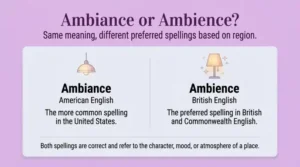
The correct spelling is yogurt or yoghurt, depending on the type of English you use. Yogurt is the standard spelling in American English, while yoghurt is widely used in British English and other English-speaking countries.
Both words have the same meaning and refer to a fermented dairy food. Many people search for “yogurt or yoghurt” because they see both spellings on food labels, in recipes, and in articles. This can make it hard to know which version to choose. The good news is that neither spelling is wrong. The main difference comes from regional spelling preferences.
If you write for an American audience, yogurt is usually the best choice. For readers in the United Kingdom, yoghurt often fits local usage better. Other regions may use either spelling, so the audience and publication style matter.
In this guide, you will learn what both words mean, where they came from, how their usage differs by region, and which spelling to use in schoolwork, business writing, recipes, and everyday communication. You will also find practical sentences and answers to common questions.
Yogurt or Yoghurt: Which Spelling Is Correct?
Yogurt and yoghurt are both correct spellings. In American English, people usually write yogurt. British English commonly uses yoghurt. Both words have the same meaning and refer to a fermented milk food. Choose the spelling that best suits your readers.
Yogurt or Yoghurt: Quick Answer
Both yogurt and yoghurt are correct spellings. The choice depends mainly on regional preference.
- Yogurt: Preferred in American English.
- Yoghurt: Common in British English and used in other English-speaking countries.
- Meaning: Both words refer to the same fermented dairy food.
- Best writing tip: Match the spelling to your audience or the style guide you follow.
Examples:
- American English: I eat Greek yogurt for breakfast.
- British English: She bought natural yoghurt at the supermarket.
- International writing: The recipe calls for plain yogurt or yoghurt.
The food itself does not change when the spelling changes. Both words describe a product made by fermenting milk with suitable bacterial cultures.
What Do Yogurt and Yoghurt Mean?
Yogurt and yoghurt are nouns. Both refer to a food made by fermenting milk with specific live bacterial cultures. The process gives the food its familiar tangy taste and thick texture.
People eat yogurt or yoghurt on its own, mix it with fruit, add it to smoothies, or use it in cooking. It can also serve as an ingredient in sauces, marinades, dressings, and baked dishes.
What Is Yogurt?
Yogurt is the spelling most commonly used in the United States. American grocery stores, recipes, and food brands generally use this form.
Common varieties include:
- Plain yogurt
- Greek yogurt
- Flavored yogurt
- Drinking yogurt
- Low-fat yogurt
- Plant-based yogurt alternatives
For instance, an American recipe might say, “Add one cup of plain yogurt to the mixture.”
What Is Yoghurt?
Yoghurt has the same meaning as yogurt. It is a common spelling in British English and appears in many British recipes, supermarket products, and food publications.
You may see terms such as natural yoghurt, Greek yoghurt, and low-fat yoghurt on product labels.
For instance, a British recipe might say, “Serve the curry with a spoonful of natural yoghurt.”
Is There a Difference in Taste or Ingredients?
No. The spelling alone does not tell you anything about the product’s taste, thickness, ingredients, or nutritional value.
Those features depend on the milk, bacterial cultures, production method, added ingredients, and brand. Always check the product label if you need specific information about ingredients or nutrition.
The Origin of Yogurt and Yoghurt
The word yogurt comes from Turkish yoğurt, a word associated with the process of fermenting or thickening milk. English adopted the word through contact with Turkish and related food traditions.
As the word entered English, writers used different spellings to represent its pronunciation. Forms such as yogurt and yoghurt developed and became established in different English-speaking regions.
Over time, yogurt became the standard spelling in American English. Yoghurt remained widely used in British English and in other places influenced by British spelling conventions.
The difference does not reflect two separate foods. It is a spelling variation, much like other regional differences in English.
English has many such pairs. For instance, American writers often use color, while British writers usually use colour. Both forms have the same meaning. The same general principle applies to yogurt and yoghurt, although their spelling patterns do not follow exactly the same rule.
The safest approach is to treat both forms as correct and choose the one that matches your intended audience.
British English vs American English
The main difference between yogurt and yoghurt is regional spelling preference.
| British English | American English | Usage |
| Yoghurt | Yogurt | The general food name |
| Greek yoghurt | Greek yogurt | A strained or Greek-style variety |
| Natural yoghurt | Plain yogurt or plain yogurt | Unflavored yogurt; product wording varies |
| Low-fat yoghurt | Low-fat yogurt | A reduced-fat variety |
| Yoghurt drink | Yogurt drink | A drinkable yogurt product |
American English generally favors yogurt. British English commonly uses yoghurt. However, food brands may use different spellings depending on their branding, market, or product label.
Which Spelling Do Dictionaries Accept?
Major English dictionaries recognize yogurt and yoghurt as spelling variants. Their preferred entries and labels may differ by dictionary and region.
A dictionary can help you confirm that a spelling is accepted. A regional style guide can help you decide which form to use in a particular publication.
What About Publishing and Food Labels?
Publishers usually expect writers to follow a consistent language style. An American cookbook will generally favor yogurt, while a British cookbook may favor yoghurt.
Product labels are a little different. A company may use a spelling as part of its established brand identity. When quoting a product name or describing a specific package, preserve the spelling printed on the product.
Which Version Should You Use?
The best spelling depends on your readers, location, and writing purpose.
United States
Use yogurt in American English. It is the usual choice for school assignments, articles, recipes, product descriptions, and business documents.
United Kingdom
Use yoghurt if you are following standard British spelling conventions. It is a familiar form in British food writing and everyday use.
Canada
Canadian English can reflect both British and American spelling influences. You may encounter both forms. If you write for a Canadian publication, follow its preferred spelling or check its style guide.
Australia
Both spellings may appear in Australian English. Check local product labels and the requirements of your publisher or organization. Consistency matters more than assuming that one form is always required.
International Writing
For a broad international audience, either spelling can work. Choose the form that best fits your main readership, then use it consistently.
If you are writing a general guide for readers from several countries, you can mention both forms near the beginning. After that, choose one spelling for the main text.
Academic Writing
Follow your school, university, journal, or department style guide. If it specifies American English, use yogurt. If it specifies British English, yoghurt may be the preferred form.
Do not switch between the spellings without a reason.
Business Writing
Use the spelling that matches your market and company style. An American food retailer will usually prefer yogurt, while a British retailer may use yoghurt.
When discussing a named product, preserve the official spelling. This helps keep product references accurate.
Common Mistakes with Yogurt and Yoghurt

The most common mistake is assuming that one spelling is correct everywhere and the other is wrong. In fact, both are accepted.
| Incorrect assumption or usage | Better choice | Explanation |
| “Yoghurt is always misspelled.” | Yoghurt in suitable regional writing | It is an accepted spelling. |
| “Yogurt is only used for one type of food.” | Yogurt or yoghurt | Both words can describe the same range of products. |
| Switching spellings without a reason | Choose one spelling and stay consistent | Consistency makes writing easier to follow. |
| Changing a brand’s spelling when quoting its name | Keep the official product spelling | Brand names and labels should remain accurate. |
| Assuming spelling tells you the fat content | Read the nutrition label | Spelling does not indicate nutritional value. |
A Simple Memory Tip
Remember this rule:
- US = yogurt
- UK = yoghurt
This is a helpful guide, not an absolute rule for every person, publisher, or product. When in doubt, check the spelling conventions used by your audience.
Yogurt or Yoghurt in Everyday Examples
Both spellings work in ordinary sentences. The important point is to choose the version that fits your audience.
Emails
American English: “Please add plain yogurt to the shopping list.”
British English: “Could you buy some natural yoghurt on your way home?”
Business Writing
American English: “Our new product line includes Greek yogurt in several flavors.”
British English: “The new range includes Greek yoghurt in several flavours.”
Notice that other spelling choices, such as flavors and flavours, may also reflect regional preferences.
News Headlines
American English: “Local Company Launches a New Plant-Based Yogurt”
British English: “Local Company Launches a New Plant-Based Yoghurt”
A news outlet will usually follow its established editorial style.
Blogs and Recipes
American English: “Use plain yogurt to make the dressing creamy.”
British English: “Mix the herbs with plain yoghurt to prepare the dressing.”
Food blogs should consider their target readers. A recipe intended for American cooks may use yogurt, while one written for British readers may use yoghurt.
Social Media
American English: “My favorite breakfast is fruit and Greek yogurt.”
British English: “My favourite breakfast is fruit and Greek yoghurt.”
Social media allows flexibility, but using a consistent spelling helps your posts look polished.
Academic Writing
American English: “The study examined the bacterial cultures used in yogurt production.”
British English: “The study examined the bacterial cultures used in yoghurt production.”
For academic work, follow the required spelling style. Also, use reliable scientific sources when discussing fermentation, bacteria, or nutritional claims.
Daily Conversation
American English: “Would you like some yogurt with your fruit?”
British English: “Would you like some yoghurt with your fruit?”
Both sentences are natural. The spelling difference does not change the meaning.
Yogurt or Yoghurt: Google Trends and Modern Usage

People search for yogurt or yoghurt because they see both forms in recipes, shops, websites, and food packaging. Searchers may also want to know which spelling is correct for an essay, a blog post, a product description, or a particular country.
General usage patterns show a clear regional preference: yogurt is standard in American English, while yoghurt is common in British English. However, both spellings appear online, and international websites may use either one.
Search interest can also depend on the context. Someone searching for Greek yogurt may want a recipe or nutrition information. A person searching for yogurt or yoghurt is more likely to want spelling guidance.
Exact search volumes, current regional rankings, and Google Trends figures are not included here because live trend data has not been checked. It would be misleading to give precise numbers without verifying them.
If you want to compare interest by country, use Google Trends to examine both terms over the same time period and in the same locations. Remember that Google Trends reports relative search interest, not the exact number of searches.
For writers, the practical lesson is simple: understand the regional preference, consider your audience, and keep your spelling consistent.
Quick Comparison Table
| Version | Meaning | Correct? | Region | Example |
| Yogurt | Fermented dairy food | Yes | Standard American English | I bought plain yogurt. |
| Yoghurt | Fermented dairy food | Yes | Common in British English | I bought plain yoghurt. |
| Greek yogurt | A Greek-style or strained yogurt product | Yes | Common American wording | Greek yogurt tastes creamy. |
| Greek yoghurt | A Greek-style or strained yoghurt product | Yes | Common British wording | Greek yoghurt tastes creamy. |
The table shows that the spelling changes by regional preference, not by the basic meaning of the word. Product styles can vary, so check labels when ingredients or preparation methods matter.
Key Takeaways
- Yogurt and yoghurt are both correct spellings.
- Yogurt is standard in American English.
- Yoghurt is common in British English.
- Both words refer to the same type of fermented food.
- Neither spelling tells you the product’s ingredients or nutritional value.
- Follow your audience’s regional spelling conventions.
- Use a consistent spelling throughout each article or document.
- Check a dictionary or style guide if you need a formal regional preference.
FAQs About Yogurt or Yoghurt
Q1. Is yogurt or yoghurt correct?
Both spellings are correct. Yogurt is the standard spelling in American English, while yoghurt is common in British English.
The words have the same meaning, so neither one is universally more correct. Choose the spelling that matches your audience, publication, or regional style guide.
Q2. Is yoghurt British spelling?
Yes, yoghurt is a common British English spelling. British writers often use it in recipes, food articles, and everyday writing. However, spelling can vary across publishers and products.
If you are writing for a British audience, yoghurt is a suitable choice unless your style guide says otherwise.
Q3. Is yogurt an American spelling?
Yes, yogurt is the standard spelling in American English. It is widely used in American recipes, grocery stores, food labels, and publications.
If you are writing for readers in the United States, yogurt is generally the best option. Keep the spelling consistent throughout your text.
Q4. Do yogurt and yoghurt mean the same thing?
Yes, yogurt and yoghurt have the same basic meaning. Both refer to a food made by fermenting milk with suitable bacterial cultures.
The spelling does not determine the flavor, texture, ingredients, or nutritional content. Those features depend on the product and how the manufacturer makes it.
Q5. Which spelling should I use in Canada?
Both yogurt and yoghurt may appear in Canadian English. The best choice depends on the audience and the publication’s style.
If you are writing for a Canadian business, school, or website, check its preferred spelling. Otherwise, choose one form and use it consistently.
Q6. Which spelling is better ?
Neither spelling is automatically better for every website. Choose the form that matches your main audience and the language used by your readers. If your page targets American readers, yogurt is a natural choice.
For British readers, yoghurt may fit better. Write useful content rather than repeating both keywords unnaturally.
Q7. Is Greek yogurt different from Greek yoghurt?
The spelling does not create a difference. Greek yogurt and Greek yoghurt refer to the same general product category, although brands can use different methods and ingredients.
Many Greek-style products have a thick texture because manufacturers strain them or use other methods to achieve a similar consistency. Check the label for product details.
Q8. How do you spell yogurt in a formal essay?
Use the spelling required by your teacher, school, university, or style guide. In American English, write yogurt. In British English, yoghurt is common. If no style is specified, choose the form that suits your audience and keep it consistent throughout the essay.
Conclusion: Yogurt or Yoghurt
The choice between yogurt or yoghurt comes down to regional spelling, not meaning. Both words describe the same fermented food, and both are accepted in English. American English generally favors yogurt, while British English commonly uses yoghurt.
For everyday writing, recipes, and articles, think about who will read your work. Use yogurt for a US audience and yoghurt for a UK audience unless a publisher, school, or company requires a different form. In Canada, Australia, and international writing, check the local preference or follow the relevant style guide.
You should also keep the spelling consistent. Switching between the two forms without a clear reason can distract readers, even though both are correct. If you discuss a specific food brand, preserve the spelling used in its official name.
The key lesson is easy to remember: yogurt is the usual American spelling, and yoghurt is common in British English. Choose the form that fits your readers, and let clarity guide your writing.

I’m Nora Ellis, an English language writer passionate about making grammar, spelling, and confusing words easy to understand. I share clear explanations and practical examples to help readers improve their English and use words with confidence.