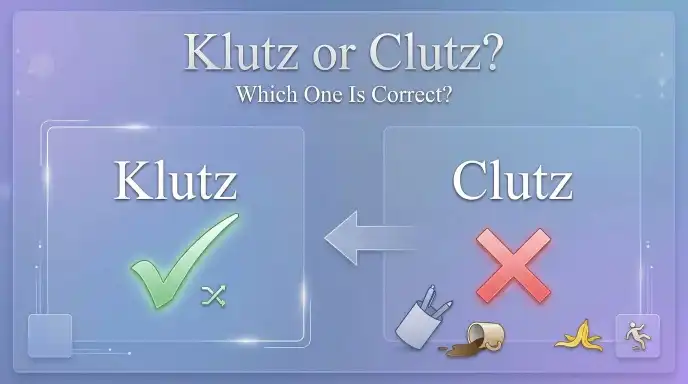
Klutz is the standard spelling for a clumsy or awkward person, while clutz is an alternative spelling found in some English references. Both forms have the same meaning, but klutz is the safer choice for standard writing.
People often search for klutz or clutz because the two words sound the same. The unusual K spelling can also make the word easy to forget. This creates confusion in emails, schoolwork, articles, social media posts, and everyday writing.
The word klutz usually describes someone who often drops things, trips, bumps into objects, or makes small physical mistakes. It can also describe a foolish or awkward person. The word is informal, so it fits casual speech better than formal academic writing.
The spelling klutz comes from Yiddish and has been used in English for decades. Learning its origin makes the spelling easier to remember. In this guide, you will learn the difference between klutz and clutz, their meanings, origins, usage, and the best form to use.
Klutz or Clutz: Quick Answer
Klutz is the standard and more widely recognized spelling.
Clutz is also found as an alternative spelling in some references. It has the same meaning as klutz.
Examples:
- He is such a klutz.
- I was a klutz and dropped my phone.
- She felt like a klutz during the game.
For school, work, websites, and other edited writing, klutz is the safer choice.
Definition and Meaning of Klutz or Clutz
A klutz is a person who is clumsy, awkward, or poorly coordinated.
Someone may be called a klutz when they often:
- Drop objects
- Trip or stumble
- Spill drinks
- Break things by accident
- Bump into furniture
- Make simple physical mistakes
For example:
Tom is such a klutz. He dropped his keys again.
The word can also describe a person who acts foolishly or awkwardly. Dictionary references give both the sense of a clumsy person and, in some definitions, a foolish or foolish person.
Is Klutz a Noun?
Yes. Klutz is a noun.
Example:
My brother is a klutz.
The plural form is klutzes.
Example:
Those two are complete klutzes.
The related adjective is klutzy.
Example:
I had a very klutzy moment today.
Is Klutz Formal?
Klutz is mainly an informal word. It is common in casual conversation and friendly writing.
For formal writing, words such as clumsy, awkward, or poorly coordinated may sound more neutral.
The Origin of Klutz or Clutz

The spelling klutz comes from Yiddish. It traces back to the Yiddish word klots, which means a wooden block or beam. The word is also connected to German Klotz, meaning a block or lump.
The idea behind the word is easy to understand. A person who is clumsy can be compared with a block of wood because they may seem awkward or poorly coordinated.
The English word became established in the 20th century. Etymological sources date its English use to the 1960s.
The unusual K spelling comes from the word’s earlier history. English speakers may expect clutz because many English words begin with cl-. That can explain why the alternative spelling appears.
British English vs American English Spelling
The spelling klutz is widely recognized in both American and British English.
Oxford lists klutz as an informal word, especially in North American English. Dictionary references also show the same spelling in British usage.
Some references record clutz as an alternative spelling. It does not normally represent a different meaning.
| Form | American English | British English | Meaning |
| klutz | Common | Used | Clumsy or awkward person |
| clutz | Alternative form | Alternative form in some references | Same meaning |
| klutzes | Plural | Plural | More than one klutz |
| klutzy | Adjective | Used | Clumsy or awkward |
The main difference is not a clear US vs UK spelling rule. Instead, klutz is the established form, while clutz appears as an alternative spelling in some sources.
Which Spelling Should You Use?
For most readers, klutz is the best spelling to use.
For American English
Use klutz in normal writing.
Example:
He’s a real klutz.
For British English
Klutz is also understood and used. It is especially associated with North American English, but British references recognize the word as well.
For International English
Choose klutz when you want the most recognizable standard form.
For Formal Writing
The word klutz is informal. A more neutral choice may be a clumsy person.
For example:
Informal: He is a klutz.
Formal: He is often clumsy.
Common Mistakes with Klutz or Clutz

Assuming Clutz Is the Only Correct Form
Many people write clutz because that is how the word sounds.
However, klutz is the established spelling in major dictionary references.
Correct: He is such a klutz.
Alternative: He is such a clutz.
For edited or professional writing, klutz is the safer option.
Thinking They Have Different Meanings
Klutz and clutz do not normally have different meanings.
Both refer to a person who is clumsy or awkward.
Using Klutz in Very Formal Writing
Klutz is an informal word.
A formal document may sound better with clumsy, awkward, or poorly coordinated documents.
Easy Memory Trick
Remember:
K = Klutz = the standard spelling
The K may look unusual, but it reflects the word’s Yiddish origin.
Klutz or Clutz in Everyday Examples
In Everyday Conversation
I dropped my coffee again. I’m such a klutz.
This sounds natural and informal.
In an Email
Sorry about the broken cup. I was being a bit of a klutz.
This works well in a friendly email.
On Social Media
I’m such a klutz today. I dropped my phone twice!
The word fits casual social media posts.
In a News Article
A news article may use klutz when reporting someone’s humorous or informal comment.
Example:
The actor joked that he was a klutz after falling during rehearsal.
In Formal Writing
Formal writing may avoid the word.
Instead of:
The employee was a klutz.
Use:
The employee was frequently clumsy.
This sounds more neutral and professional.
Klutz or Clutz : Google Trends & Usage Data

Search interest can vary by country and time. Search data also changes as people use different spellings online.
The spelling klutz has strong dictionary support and is the main form found in established English references. Clutz appears as an alternative spelling in some sources.
This means online searches for clutz do not always show that it is a completely separate word. Many users simply hear the word and spell it with C.
The word is also more common in informal contexts. People often use it when talking about someone who drops things or makes small mistakes.
For accurate professional writing, klutz remains the safer spelling.
Klutz or Clutz: Quick Comparison Table
| Feature | Klutz | Clutz |
| Spelling | Established form | Alternative spelling |
| Meaning | Clumsy or awkward person | Same meaning |
| Part of speech | Noun | Noun |
| Pronunciation | /klʌts/ | Usually the same |
| Plural | Klutzes | Clutzes |
| Formal use | Informal word | Informal word |
| Best choice for edited writing | Yes | Less preferred |
| Origin | Yiddish | Alternative spelling of klutz |
Key Takeaways
- Klutz is the established spelling.
- Clutz is an alternative spelling found in some references.
- Both forms refer to a clumsy or awkward person.
- Klutz comes from Yiddish.
- The word is mainly informal.
- The plural form is klutzes.
- The related adjective is klutzy.
- Use klutz when you want the safest standard form.
FAQs
Q1. Is klutz or clutz correct?
Klutz is the established spelling and the safer choice for standard writing. Clutz is also recorded as an alternative spelling in some references. Both forms have the same basic meaning.
Q2. What does klutz mean?
A klutz is a person who is often clumsy or awkward. They may drop things, trip, spill drinks, or bump into objects. The word can also describe someone who acts foolishly.
Q3. Is clutz a real word?
Yes. Clutz appears as an alternative spelling of klutz in some English references. It has the same basic meaning. However, klutz is the safer form for edited and professional writing.
Q4. Is klutz an American word?
Klutz is especially associated with North American English, but it is also recognized in British English. Oxford labels it as an informal word used especially in North American English.
Q5. What is the plural of klutz?
The plural of klutz is klutzes.
Example:
The two klutzes dropped the boxes.
Q6. Is klutz a rude word?
Klutz is usually informal and can sound playful. However, it can also be insulting when used harshly. Tone and context matter. Calling yourself a klutz is often lighthearted.
Q7. What is the adjective form of klutz?
The common adjective is klutzy. It means clumsy or awkward.
Example:
I had a klutzy moment at work.
Conclusion:
When choosing between klutz or clutz, klutz is the safer spelling for standard English writing. Clutz is an alternative form that appears in some references, so it is not always treated as a completely unrelated word.
The word klutz means a clumsy or awkward person. It can describe someone who drops things, trips, spills drinks, or makes small physical mistakes. It can also describe someone who behaves foolishly.
The word comes from Yiddish klots, which means a wooden block or beam. This history helps explain the unusual K spelling.
For schoolwork, websites, professional content, and edited writing, klutz is the better choice. The word is informal, so use more neutral words such as clumsy when the context is formal.
Remember the simple rule: Klutz is the established form. Clutz is an alternative spelling. This distinction will help you choose the clearest form in everyday and professional writing.

I’m Nora Ellis, an English language writer passionate about making grammar, spelling, and confusing words easy to understand. I share clear explanations and practical examples to help readers improve their English and use words with confidence.







4 thoughts on “Klutz or Clutz: Correct Spelling, Meaning & Usage ”