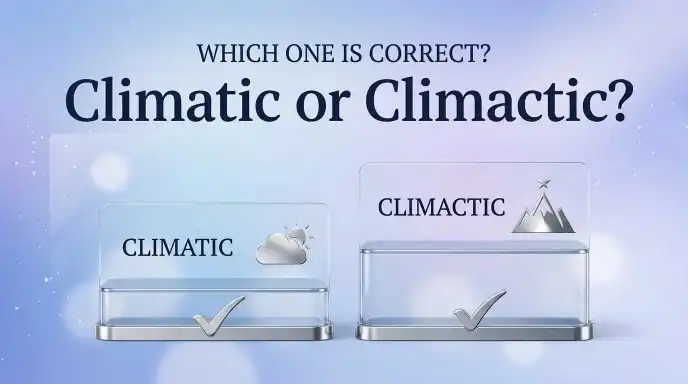
Climatic and climactic are both correct words, but they have different meanings. Climatic relates to climate and weather, while climactic relates to the most important or exciting point of an event, story, or situation.
These words often confuse readers because they look and sound very similar. Both begin with clim, and only a small spelling difference separates them.
For example, you would write “climatic conditions” when talking about weather or climate. You would write “the climactic scene” when talking about the most exciting part of a movie or story.
This difference matters in essays, articles, emails, academic work, and everyday writing. Using the wrong word can change the meaning of your sentence.
The good news is that the rule is simple. Climatic comes from climate, while climactic relates to climax.
In this guide, you will learn the meaning, origin, spelling, usage, common mistakes, and examples of both words. You will also learn an easy trick to remember which one to use.
Climatic or Climactic : Featured Snippet Answer
Climatic means related to climate or general weather conditions. Climactic means related to a climax, or the most important or exciting point of something. Use climatic for weather and climate. Use climactic for stories, events, and dramatic peak moments. Both words are correct, but they are not interchangeable.
Climatic or Climactic : Quick Answer
The easiest way to remember the difference is to look at the base word.
- Climatic comes from climate.
- Climactic relates to climax.
- Climatic describes climate or weather.
- Climactic describes a peak or important moment.
Examples of Climatic
The region has difficult climatic conditions.
This means the weather and climate conditions are difficult.
Scientists studied the climatic changes in the area.
Here, climatic relates to climate.
Examples of Climactic
The movie has a climactic ending.
This means the ending contains the most exciting or important part of the story.
The team scored during the climactic moment of the game.
Here, climactic describes the peak moment.
Quick Memory Tip
Think:
Climate → Climatic → Weather
Climax → Climactic → Peak
This simple connection can help you choose the correct word.
What Does Climatic or Climactic Mean?
Although climatic and climactic look almost identical, they have different meanings.
What Does Climatic Mean?
Climatic is an adjective that means related to climate or general weather conditions. It is common in scientific, environmental, and geographic writing.
Climate refers to the usual weather patterns of a place over a long period.
Examples include:
- temperature
- rainfall
- wind patterns
- seasonal conditions
- long-term weather patterns
For example:
The region has unusual climatic conditions.
Farmers must consider climatic factors.
The study examines climatic changes.
In each example, climatic connects to climate.
What Does Climactic Mean?
Climactic means related to a climax. It describes the most important, exciting, or intense point of something.
For example:
The film ends with a climactic battle.
The final chapter contains a climactic moment.
The speech reached a climactic point.
Here, the word has nothing to do with weather. It describes the peak of an event or situation.
The Difference in One Sentence
Climatic describes climate.
Climactic describes a climax.
That is the main rule to remember.
The Origin of Climatic or Climactic
The two words have different roots.
Origin of Climatic
Climatic comes from climate with the suffix -ic.
The basic connection is:
climate → climatic
The word is commonly used for things related to climate and weather.
Examples include:
- climatic conditions
- climatic change
- climatic factors
- climatic variation
The word climatic was first recorded in English in the early 19th century.
Origin of Climactic
Climactic comes from climax.
The connection is:
climax → climactic
The word climactic refers to something connected with a climax or peak point.
It is often used for:
- stories
- movies
- speeches
- sports
- performances
- major events
Dictionary sources trace climactic to climax and give it the meaning of relating to the most important or exciting point of something.
Why Do the Spellings Look So Similar?
Both words begin with clim-.
However, they come from different base words:
climate + -ic = climatic
climax + -ic = climactic
That is why the extra c matters.
Remembering the base words is much easier than trying to memorize the spelling alone.
British English vs American English Spelling
There is no major British-American spelling difference between climatic and climactic.
Both words use the same spelling in British and American English. The main difference is their meaning, not their regional spelling.
| Word | British English | American English | Example |
| climatic | Correct | Correct | Climatic conditions affect farming. |
| climactic | Correct | Correct | The film has a climactic ending. |
| climatically | Correct | Correct | The regions differ climatically. |
| climactically | Correct | Correct | The story builds climactically toward its ending. |
You do not need to change the spelling for an American or British audience.
The important point is meaning.
Use climatic when you mean climate.
Use climactic when you mean climax.
Which Spelling Should You Use?
Choosing between these words is not about British or American English. It depends on what you want to say.
United States
Use climatic for climate and weather.
The area has extreme climatic conditions.
Use climactic for a peak moment.
The movie’s climactic scene was unforgettable.
United Kingdom
The same rule applies.
Scientists examined climatic changes.
The play ends with a climactic scene.
Canada
Canadian English follows the same basic distinction.
Choose climatic for climate.
Choose climactic for a climax.
Australia
Australian English also uses both words with the same meanings.
Climatic conditions affect the region.
The climactic final match attracted thousands of fans.
International Writing
For global readers, choose the word that matches your meaning.
Do not choose based on pronunciation alone.
The base word gives you the answer:
Climate → climatic
Climax → climactic
Academic Writing
Both words can appear in academic writing.
Climatic is common in:
- environmental studies
- geography
- agriculture
- ecology
- earth science
Climactic can appear in:
- literature
- film studies
- history
- music
- narrative analysis
Business Writing
Use climatic when discussing environmental or regional conditions.
Use climactic when describing an important final event.
For example:
The company faces difficult climatic conditions in the region.
The final meeting became the climactic moment of the negotiations.
Common Mistakes with Climatic or Climactic
Using Climatic for a Story’s Peak
Incorrect:
The movie ends with a climatic battle.
Correct:
The movie ends with a climactic battle.
Why?
The battle is the most important or exciting part of the story.
Memory tip: A story has a climax, so use climactic.
Using Climactic for Climate
Incorrect:
The region has difficult climactic conditions.
Correct:
The region has difficult climatic conditions.
Why?
The sentence discusses climate and weather.
Memory tip: Climate → climatic.
Thinking Climactic Means Weather
The spelling can make this mistake easy.
However, climactic does not mean related to climate.
For example:
The climactic scene shocked the audience.
This sentence is about a story, not weather.
Thinking Climatic Means Exciting
Climatic does not mean exciting or dramatic.
For example:
The region has extreme climatic conditions.
This sentence describes the climate.
The correct word for an exciting peak is climactic.
Using the Words Interchangeably
Climatic and climactic are not interchangeable.
Compare:
Climatic changes
with:
Climactic changes
The first relates to climate.
The second suggests something connected with a climax.
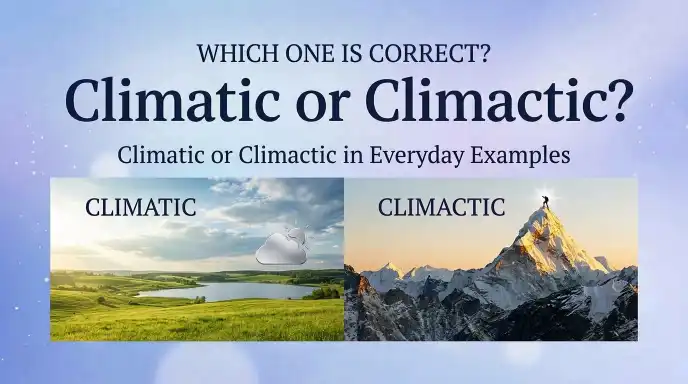
Climatic or Climactic in Everyday Examples
In Emails
Climatic:
The trip may be affected by climatic conditions.
Climactic:
The final presentation was the climactic part of the event.
In Business Writing
Climatic:
The company studies climatic risks before opening new farms.
Climactic:
The final negotiation became the climactic moment of the deal.
In News Headlines
Climatic:
New Report Examines Climatic Changes
Climactic:
Team Wins After Climactic Final Match
News writers may use climactic when an event reaches a dramatic peak.
In Blogs
Climatic:
Several climatic factors affect travel in this region.
Climactic:
The book’s climactic chapter changes everything.
On Social Media
That was the climactic moment of the whole show!
This is a natural informal use.
For climate discussions, you might write:
These climatic changes are affecting local wildlife.
In Academic Writing
Climatic:
The research examines the effects of climatic variation on plant growth.
Climactic:
The novel’s climactic scene changes the main character’s goals.
The context makes the difference clear.
In Daily Conversation
You might say:
The final goal was the climactic moment of the game.
For weather or climate:
The region has unusual climatic conditions.
Both words sound natural when used in the right context.
Climatic or Climactic : Google Trends & Modern Usage
People often search for climatic or climactic because the two words look and sound similar.
The confusion is common when writers want to describe a major moment. A writer may remember the word climate and accidentally choose climatic instead of climactic.
The two words also appear in different fields.
Climatic is common in topics such as:
- climate science
- geography
- agriculture
- ecology
- environmental studies
- weather patterns
Climactic is common in topics such as:
- movies
- books
- stories
- sports
- speeches
- dramatic events
- performances
Dictionary sources support this clear difference. Climatic relates to general weather conditions, while climactic relates to the most important or exciting point of a story or situation.
Exact Google Trends popularity can change by country and time period. Without a specific date range and region, it would be misleading to give exact search-volume figures.
The strongest usage rule is simple:
Climate belongs to climate.
Climactic belongs to climax.
Quick Comparison Table
| Version | Meaning | Correct? | Main Context | Example |
| climatic | Related to climate | Yes | Weather and environment | Climatic conditions affect crops. |
| climactic | Related to a climax | Yes | Stories and important events | The film has a climactic ending. |
| climatically | In relation to climate | Yes | Climate and science | The areas differ climatically. |
| climactically | In relation to a climax | Yes | Stories and events | The story builds climactically. |
Climatic vs Climactic: The Easiest Memory Trick
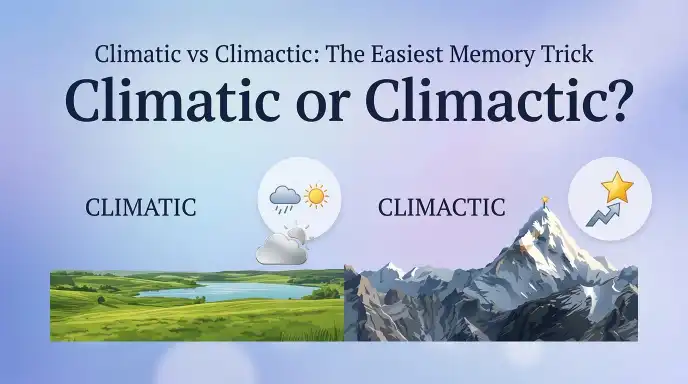
If you often confuse these words, use the base-word test.
Think About Climate
When the meaning relates to climate, choose climatic.
Examples include climatic conditions, climatic changes, and climatic factors. These terms all describe things connected with climate.
Think About Climax
For something linked to a climax, choose climactic.
Common examples are a climactic scene, a climactic battle, and a climactic moment. Each term refers to the most important or exciting point.
The extra c in climactic can remind you of climax.
Climate → climatic
Climax → climactic
That is the simplest rule.
Key Takeaways
- Climatic and climactic are both correct words.
- Climatic means related to climate or weather.
- Climactic means related to a climax or peak moment.
- Use climatic for weather and environmental topics.
- Use climactic for stories, events, performances, and dramatic moments.
- British and American English use the same spellings.
- Climate → climatic is an easy memory rule.
- Climax → climactic explains the extra c.
FAQs
Q1. What is the difference between climatic and climactic?
Climatic relates to climate, weather, or atmospheric conditions. Climactic relates to a climax, or the most important or exciting point of something. For example, use climatic conditions for weather and a climactic scene for the peak moment in a movie or story.
Q2. Is climatic a correct word?
Yes, climatic is a correct English word. It means related to climate or general weather conditions. You may see it in phrases such as climatic change, climatic conditions, and climatic factors. It is common in environmental, scientific, geographic, and academic writing.
Q3. Is climactic a correct word?
Yes. Climactic is a standard English adjective. It describes something connected with a climax or the most important and exciting point of an event. Common phrases include climactic moment, climactic scene, climactic battle, and climactic ending.
Q4. Is it a climatic moment or climactic moment?
The correct phrase is usually climactic when you mean the most important or exciting point of an event. For example, “The final goal was the climactic moment of the match.” Climatic moment would suggest a connection with climate, so it would not fit this meaning.
Q5. Is it climatic change or climactic change?
If you mean a change related to climate, use climatic change. The word climatic means related to climate. If you mean a change connected with the climax of a story or event, climactic change may be possible, but it has a different meaning and is much less common.
Q6. How can I remember climatic and climactic?
Connect each word with its base word. Climatic comes from climate, so use it for weather and climate. Climactic relates to climax, so use it for the highest or most exciting point of an event. The extra c in climactic can help you remember climax.
Q7. Are climatic and climactic pronounced the same?
No. They have different sounds in the middle. Climatic follows the pronunciation of climate, while climactic has the stronger c sound associated with climax. This difference can help you recognize the words when speaking, but their meaning is the best guide when writing.
Q8. Is climactic only used for movies and stories?
No. Climactic can describe the peak point of many events. You can use it for a sports match, election campaign, speech, negotiation, performance, historical event, or story. The key idea is that the event reaches an important or exciting high point.
Q9. Is climate related to weather?
Yes. Climatic means related to climate or general weather conditions. For example, climatic conditions can describe the usual weather conditions in an area. The word is especially useful in scientific, environmental, geographic, and academic contexts.
Q10. Which is correct, climatic or climactic?
Both are correct, but they have different meanings. Choose climatic when you mean something related to climate. Choose climactic when you mean something related to a climax or peak moment. The correct choice depends on the meaning of your sentence, not on British or American spelling.
Conclusion:
Climatic or climactic is a common English word-choice question because the two words look and sound very similar. However, their meanings are easy to separate once you connect each word to its base form.
Use climatic when you are talking about climate, weather, or environmental conditions. For example, you can write about climatic changes, climatic factors, or climatic conditions.
Use climactic when you are talking about a climax or the highest point of an event. You can describe a climactic scene in a movie, a climactic moment in a game, or a climactic ending in a novel.
The distinction does not change between British and American English. Both varieties use the same spellings.
The easiest memory trick is simple: climate gives you climatic, while climax gives you climactic.
Once you remember those two base words, this common spelling confusion becomes much easier to avoid. Use the right form in your next article, essay, email, or story.

I’m Nora Ellis, an English language writer passionate about making grammar, spelling, and confusing words easy to understand. I share clear explanations and practical examples to help readers improve their English and use words with confidence.








3 thoughts on “Climatic or Climactic: Definitions, Usage & Examples ”