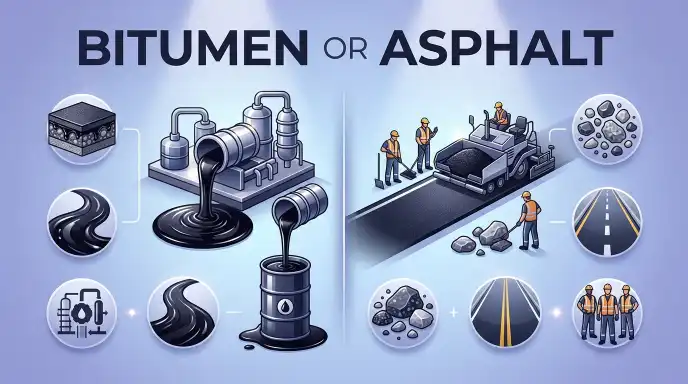
Bitumen and asphalt are closely related, but they are not always the same thing. In technical road construction, bitumen usually refers to the sticky binder, while asphalt often means a mixture of bitumen and mineral materials such as stone and sand.
However, the terms can overlap in everyday English, especially in North America. People search for “bitumen or asphalt” because both words describe black, sticky materials used on roads, roofs, and other surfaces.
The confusion grows because the meaning changes by country and by context. In the UK and many other regions, bitumen is the common technical term for the binder. In North American usage, asphalt can refer to the binder itself or to the finished road material.
The difference matters when you write about road construction, engineering, paving, roofing, or materials. Using the right word can make your writing more precise.
This guide explains bitumen vs asphalt in simple English. You will learn what each term means, where the words came from, how British and American usage differs, and which term fits different situations.
Bitumen or Asphalt: Featured Snippet and AI Overview
Bitumen is a sticky, petroleum-based binder used to hold road materials together. Asphalt often refers to a road or paving mixture made with bitumen and mineral aggregates. In North America, asphalt can also mean the binder itself. Therefore, the best term depends on the region and technical context.
Bitumen or Asphalt: Quick Answer
The simplest answer is this:
- Bitumen is usually the binder.
- Asphalt is often the mixture made with bitumen and aggregates.
- In North America, asphalt can also refer to the binder.
- In everyday speech, the two words may be used as near-synonyms.
A road surface can contain bitumen, stone, sand, and other mineral materials. The bitumen helps bind these materials together. The resulting mixture can be called asphalt.
For example:
The contractor ordered bitumen for the road project.
Here, the focus is on the binder.
The workers laid new asphalt on the road.
Here, the focus is on the finished road material or surface.
The exact meaning depends on the country, industry, and sentence.
What Does Bitumen or Asphalt Mean?
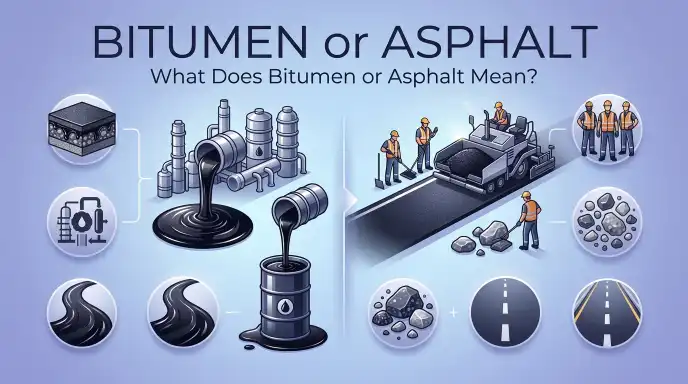
What Does Bitumen Mean?
Bitumen is a thick, sticky material obtained mainly from crude oil refining. It is used as a binder in road construction and in several other applications.
It can be used in:
- Road construction
- Road maintenance
- Roofing
- Waterproofing
- Bitumen emulsions
- Pavement treatments
Cambridge defines bitumen as a black, sticky substance used for roads and roofs.
In technical writing, the word usually focuses on the material itself.
What Does Asphalt Mean?
Asphalt can have a broader meaning.
In road engineering, asphalt often means a mixture containing aggregate, mineral filler, and a bituminous binder. The mixture is prepared and then laid and compacted to create a road surface.
Cambridge also defines asphalt as a black, sticky substance that is often mixed with small stones or sand and forms a hard surface.
For example:
The city repaired the damaged asphalt.
The sentence refers to the road surface.
Why Do People Confuse the Two?
The confusion comes from regional terminology.
The Asphalt Institute explains that bitumen is commonly used in Europe, while asphalt or asphalt binder is commonly used for the binder in North America. Outside North America, asphalt often describes mixtures of bitumen and mineral aggregates.
So, both words can be correct. The important question is what you are describing.
The Origin of Bitumen or Asphalt
The two words have different histories.
Origin of Bitumen
The English word bitumen comes from Latin bitumen. The term has a long history and has been used to describe naturally occurring or processed petroleum-like materials.
Modern technical use often refers to the heavy material produced from crude oil refining. UK government technical material describes bitumen as a binder obtained from crude oil by refinery processes.
The word therefore has both an old linguistic history and a strong modern connection with petroleum and road engineering.
Origin of Asphalt
Asphalt has an older history as well. The word came into English through forms related to Latin and Greek terms for a material used for waterproofing and construction.
Today, its meaning depends strongly on context. In general English, asphalt can mean the black material used to make roads. In engineering, it can describe a mixture of aggregate and bituminous binder.
Did British and American English Change the Spelling?
Not in the usual sense.
The main difference is usage, not spelling. British English commonly uses bitumen for the binder. American English commonly uses asphalt or asphalt binder for that material.
This is why the same road material may receive different names in different countries.
British English vs American English
The biggest difference is terminology.
| Meaning or Context | British English | American English | Example |
| Petroleum-based road binder | bitumen | asphalt / asphalt binder | The binder was heated before use. |
| Finished road mixture | asphalt | asphalt | The road needs new asphalt. |
| Road surfacing | bitumen / asphalt, depending on context | asphalt | Workers repaired the road surface. |
| Technical road material | bitumen for binder | asphalt binder for binder | The specification gives the binder grade. |
| Everyday road surface | asphalt is also used | asphalt | The asphalt is damaged. |
British technical sources make a clear distinction between bitumen as a binder and asphalt as a mixture. UK road guidance, for example, refers to bitumen as a binder and asphalt as a road surfacing material.
American technical usage often uses asphalt for the binder itself. This is why an American reader may naturally say asphalt binder, while a British reader may prefer bitumen.
What About Canada and Australia?
Usage can vary by industry and context.
In technical writing, bitumen is widely understood internationally. Asphalt is also common when referring to road mixtures and surfaces.
When writing for a specific country, follow the terminology used by local road agencies, engineering standards, and professional publications.
Which Version Should You Use?
There is no single word that fits every situation.
United States
Use asphalt when talking about road surfaces or paving materials.
In technical writing, asphalt binder may be used when referring specifically to the binder.
Example:
The contractor placed a new asphalt surface.
United Kingdom
Use bitumen when you mean the binder.
Use asphalt when you mean the road mixture or surfacing material.
Example:
The asphalt mixture contains a bituminous binder.
Canada
Both terms are understood. For technical work, check the terminology used by the relevant road authority or engineering standard.
Australia
Both bitumen and asphalt are common in road and construction contexts. Use bitumen when the focus is the binder and asphalt when discussing the paving mixture or surface.
International Writing
For a global audience, define the term the first time you use it.
For example:
Bitumen, also called asphalt binder in North American usage, is used to bind road aggregates.
This approach reduces confusion.
Academic Writing
Use the term that matches your source, field, or regional standard. Avoid treating bitumen and asphalt as exact synonyms when your subject requires technical precision.
Business Writing
Clarity matters most. If your readers come from different countries, briefly define the term.
A simple definition can prevent costly misunderstandings in contracts, specifications, and construction documents.
Common Mistakes with Bitumen or Asphalt
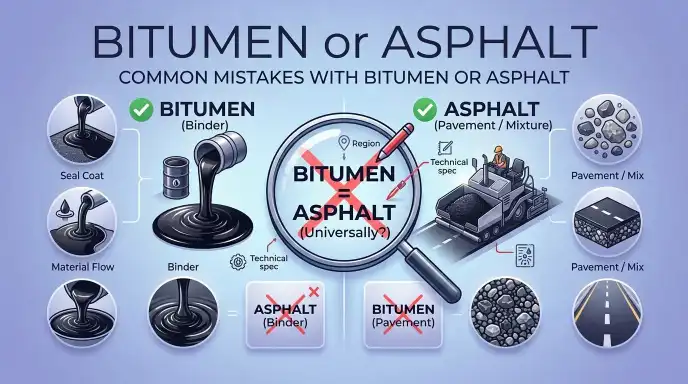
Treating Them as Exact Synonyms Everywhere
Incorrect:
Bitumen and asphalt always mean exactly the same material.
Correct:
Bitumen usually refers to the binder, while asphalt often refers to the mixture or road material.
Explanation:
The terms overlap, but technical usage varies by region.
Memory tip:
Think bitumen = binder and asphalt = mixture or surface.
Assuming Asphalt Only Means the Road Surface
Incorrect:
Asphalt can only mean a finished road.
Correct:
Asphalt can refer to the paving material and, in North American usage, can also refer to the binder.
Explanation:
The word has more than one established use.
Calling Bitumen a Type of Stone
Incorrect:
Bitumen is the stone used in road construction.
Correct:
Bitumen is a binder used to hold road materials together.
Explanation:
Stone, sand, and other aggregates are separate components of many asphalt mixtures.
Confusing Bitumen With Tar
Incorrect:
Bitumen and tar are always the same.
Correct:
Bitumen and tar are different materials.
Explanation:
Bitumen is mainly associated with petroleum refining. Tar is associated with the processing of materials such as coal. Technical road terminology treats them as different binders.
Assuming One Term Is a Spelling Error
Incorrect:
Asphalt is the American spelling of bitumen.
Correct:
Bitumen and asphalt are different terms with overlapping uses.
Explanation:
The difference is mainly about meaning and regional terminology, not spelling.
Bitumen or Asphalt in Everyday Examples
These words appear most often in construction, transport, engineering, news, and general writing.
In an Email
Please confirm the type of bitumen required for the road repair project.
This works well when the email focuses on the binder.
In Business Writing
The contractor will supply the required asphalt mixture for the parking area.
The phrase clearly describes the paving material.
In a News Headline
Asphalt Repairs Begin on Main Road
The shorter word works well in a headline because readers quickly understand the road context.
In a Blog
A damaged asphalt surface can develop cracks when water enters the pavement.
This is a natural choice when discussing the road surface.
In Social Media
The new asphalt surface has made the road smoother and safer for drivers.
The term is easy for a general audience to understand.
In Academic Writing
The asphalt mixture contains aggregate and a bituminous binder.
This sentence gives a more precise technical description.
In Daily Conversation
They are repairing the asphalt outside our house.
In everyday speech, asphalt is common when people mean the road or paved surface.
Bitumen or Asphalt: Google Trends & Modern Usage

Search interest in bitumen or asphalt reflects a mix of language questions and practical construction topics.
People may search these terms because they want to know:
- If bitumen and asphalt are the same
- Which material is used for roads
- What asphalt binder means
- If bitumen is better for paving
- Which term is used in the UK or US
- What material is used in road construction
- Why different countries use different names
Exact search popularity can change by country, season, industry, and time period. Without a fixed Google Trends location and date range, it would be misleading to give exact search numbers or claim that one term is universally more popular.
Modern technical usage also shows a clear regional pattern. The Asphalt Institute notes that bitumen is commonly used in Europe, while asphalt or asphalt binder is used in North America. It also notes that outside North America, asphalt commonly describes mixtures of bitumen and mineral aggregates.
UK government road documents support the technical distinction. They use bitumen for the binder and asphalt for various road surfacing systems and mixtures.
For writers, the key lesson is simple: regional context matters.
Quick Comparison Table
| Version | Meaning | Correct? | Region | Example |
| Bitumen | Petroleum-based binder | Yes | UK and many international contexts | Bitumen binds the aggregate. |
| Asphalt | Road mixture or surface | Yes | Widely used | The road has a new asphalt surface. |
| Asphalt binder | Binder used in asphalt mixtures | Yes | Common in North America | The asphalt binder meets the required grade. |
| Bituminous binder | Binder used to hold materials together | Yes | Technical and international | The mixture contains a bituminous binder. |
| Tar | A different material from bitumen | Yes, but not a synonym | General and technical contexts | The material is not the same as bitumen. |
Key Takeaways
- Bitumen usually means the sticky binder used in road construction.
- Asphalt often means a mixture of binder and mineral aggregate.
- In North America, asphalt can also mean the binder.
- In British English, technical writing often uses bitumen for the binder.
- The difference is mainly terminology and context, not spelling.
- Asphalt is common when talking about roads and paved surfaces.
- Bitumen is useful when you need to identify the binder specifically.
- For international readers, define the term clearly the first time you use it.
FAQs About Bitumen or Asphalt
Q1. Is bitumen the same as asphalt?
Not always. Bitumen usually refers to the binder, while asphalt often refers to a mixture of bitumen and aggregates. However, North American usage can use asphalt for the binder itself. The exact meaning depends on regional and technical context.
Q2. Which is better, bitumen or asphalt?
The question is usually about different terms rather than two completely separate road materials. Bitumen is commonly the binder, while asphalt often describes the paving mixture. The right material depends on the road design, climate, traffic, specifications, and construction method.
Q3. Is asphalt made from bitumen?
Often, yes. Many asphalt mixtures contain bituminous binder and mineral aggregates such as crushed stone, sand, or filler. The binder helps hold the solid materials together. Technical road documents define asphalt as a mixture containing aggregate and a bituminous binder.
Q4. Do Americans say asphalt instead of bitumen?
Americans commonly use asphalt or asphalt binder for material that British technical usage often calls bitumen. The Asphalt Institute specifically notes this regional difference in terminology.
Q5. Do British people use the word bitumen?
Yes. Bitumen is a standard British English term, especially in road construction and engineering. British technical sources use the word for the binder used in pavement materials.
Q6. Is bitumen used only for roads?
No. Bitumen is also used in areas such as roofing, waterproofing, and protective coatings. Its strong binding and water-resistant properties make it useful in several construction applications. Cambridge also lists roads and roofs among its common uses.
Q7. Is asphalt only used for roads?
No. Asphalt is strongly associated with roads, but it can also be used for driveways, parking areas, paths, courts, and other paved surfaces. The exact use depends on the type of asphalt mixture and the project requirements.
Q8. What is the difference between asphalt and asphalt concrete?
Asphalt concrete is a specific type of asphalt mixture made with aggregate, filler when needed, and a bituminous binder. It is widely used for pavement construction. Therefore, asphalt is a broader term, while asphalt concrete can describe a particular engineered mixture.
Q9. Is bitumen the same as tar?
No. Bitumen and tar are different materials. Bitumen is commonly produced from petroleum refining, while tar has traditionally been associated with the processing of materials such as coal. They can both act as binders, but they should not be treated as identical terms.
Q10. Which word should I use in international writing?
Use bitumen when you specifically mean the binder and asphalt when you mean the road mixture or surface. If your audience is international, define the term once. This avoids confusion between British, American, and technical usage.
Conclusion:
Bitumen and asphalt are closely connected, but they do not always mean exactly the same thing. In technical road construction, bitumen usually refers to the binder. Asphalt often refers to the mixture of bitumen and mineral aggregates that forms a road surface.
Regional usage adds another layer of confusion. British and many international technical contexts commonly use bitumen for the binder. In North America, asphalt and asphalt binder are common terms for that material.
For general writing, asphalt is a natural choice when you mean a paved road or surface. Use bitumen when the focus is the binder itself. In academic or engineering writing, follow the terminology used by the relevant standard, industry, or local authority.
The most important point is that these words are not simply British and American spellings of the same word. They have overlapping meanings, but their use changes with context.
Remember: bitumen is usually the binder, while asphalt often refers to the paving mixture or surface. When writing for a global audience, define your term clearly and keep your wording consistent.

I’m Nora Ellis, an English language writer passionate about making grammar, spelling, and confusing words easy to understand. I share clear explanations and practical examples to help readers improve their English and use words with confidence.






2 thoughts on “Bitumen or Asphalt: Key Differences and Uses Guide”