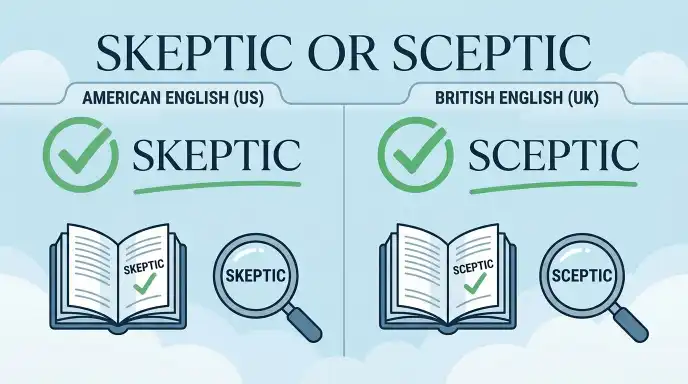
Skeptic and sceptic have the same meaning. Skeptic is the standard American English spelling, while sceptic is the standard British English spelling. Both words describe a person who questions claims, ideas, or information before accepting them as true.
People often search for skeptic or sceptic because the two spellings look different but sound the same. The confusion usually comes from the differences between American and British English. If you read books, news, websites, or academic work from different countries, you may see both forms.
The word can describe someone who asks for proof before believing a claim. It can also describe a person who doubts if something is true, useful, or possible. For example, you might say, “She is a skeptic about the new treatment” in American English, or “She is a sceptic about the new treatment” in British English.
The important point is simple: neither spelling is wrong. Your choice depends mainly on the variety of English you are using.
Skeptic or Sceptic : Quick Answer
Skeptic is the preferred spelling in American English, while sceptic is preferred in British English and many other varieties of English.
Both words mean a person who doubts something or wants evidence before accepting it as true.
Examples:
- American English: “He is a skeptic of the claim.”
- British English: “He is a sceptic of the claim.”
The pronunciation and meaning are the same. The main difference is the spelling.
Definition and Meaning of Skeptic or Sceptic
A skeptic or sceptic is a person who does not quickly accept a claim as true. They may ask questions, look for evidence, or wait for proof.
Simple Meaning
The simple meaning is a person who doubts or questions something.
For example:
“She was skeptical about the plan.”
This means she was not sure that the plan would work.
Context and Usage
The word can appear in many situations. People can be skeptical about:
- New products
- Scientific claims
- News reports
- Political statements
- Business promises
- Health claims
- New technology
- Predictions
- Unusual stories
For example:
“Many people were skeptics when the technology was first introduced.”
Here, skeptics means people who were not convinced that the technology would succeed.
Skeptic as a Noun
Skeptic and sceptic are nouns.
Example:
“He is a skeptic.”
The word identifies a person who doubts or questions something.
Skeptical and Sceptical
The related adjective also has two common spellings:
- Skeptical = American English
- Sceptical = British English
Example:
“She was skeptical about the results.”
British English:
“She was sceptical about the results.”
The Origin of Skeptic or Sceptic
The words skeptic and sceptic come from the Greek word skeptikos, which means thoughtful, reflective, or one who examines.
The word entered English through Latin and French forms before developing into the modern English spellings.
The spelling difference comes from the influence of different European languages and English spelling traditions.
The k spelling became common in American English. The c spelling remained common in British English.
This difference is similar to other American and British spelling differences.
For example:
- Skeptic vs sceptic
- Skeptical vs sceptical
- Analyze vs analyse
- Color vs colour
The difference does not change the meaning.
British English vs American English Spelling
The main spelling difference is the use of k and c.
| Meaning | American English | British English |
| Person who doubts | Skeptic | Sceptic |
| Showing doubt | Skeptical | Sceptical |
| State of doubt | Skepticism | Scepticism |
American English
In American English, skeptic is the standard spelling.
Example:
“The scientist remained a skeptic.”
British English
In British English, sceptic is the standard spelling.
Example:
“The scientist remained a sceptic.”
Both forms are correct within their respective spelling systems.
Which Spelling Should You Use?
Your choice should depend on your audience and the type of English you are writing.
Use “Skeptic” for American English
Choose skeptic if you are writing for readers in the United States.
It is also a natural choice for American academic, business, and general writing.
Use “Sceptic” for British English
Choose sceptic if your audience uses British English.
This includes many readers in the United Kingdom and other regions influenced by British spelling.
For Global Writing
If your content targets an international audience, either spelling can work. The key is consistency.
Do not switch between skeptic and sceptic without a reason.
If you use American English throughout an article, use skeptic. If you use British English, use sceptic.
Common Mistakes with Skeptic or Sceptic
Many mistakes happen because writers are unsure which spelling belongs to which English variety.
| Incorrect or Confusing Form | Correct Form | Usage |
| Skeptick | Skeptic | American English |
| Sceptick | Sceptic | British English |
| Skeptical | Skeptical | American English |
| Sceptical | Sceptical | British English |
| Skepticism | Skepticism | American English |
| Scepticism | Scepticism | British English |
Mixing Spellings
Avoid using skeptic in one paragraph and sceptic in another when you are following one spelling system.
Thinking One Form Is Wrong
Both forms are accepted. The difference is mainly regional.
Confusing Skeptic With Cynic
A skeptic asks for evidence or remains uncertain.
A cynic often assumes that people are motivated by selfish or dishonest reasons.
These words can overlap in some contexts, but they do not have exactly the same meaning.
Skeptic or Sceptic in Everyday Examples
The word appears in everyday speech, online discussions, news writing, and formal communication.
In Emails
“I was initially a skeptic, but the results changed my opinion.”
British English:
“I was initially a sceptic, but the results changed my opinion.”
In News Writing
“The proposal has attracted both supporters and skeptics.”
British English:
“The proposal has attracted both supporters and sceptics.”
On Social Media
“I am still a skeptic. I need more evidence.”
This informal use is common when people discuss claims or opinions online.
In Formal Writing
“Some researchers remain skeptical about the long-term effects.”
British English:
“Some researchers remain sceptical about the long-term effects.”
In Everyday Conversation
“My brother is a skeptic when it comes to online offers.”
This means he does not easily trust such offers.
Skeptic or Sceptic : Google Trends & Usage Data
Search interest for skeptic and sceptic varies by country because English spelling conventions differ across regions.
The skeptic spelling is strongly associated with American English. The sceptic spelling is more closely associated with British English and countries that commonly follow British spelling conventions.
Search behavior can also change based on the topic. People may search for these words when checking spelling, learning English, reading news, or studying differences between American and British English.
It is important not to treat search popularity as proof that one spelling is more correct. Search volume can change over time and can reflect the size of a country’s online population, search habits, and current events.
For writers, the practical rule is more useful: match your spelling to your target audience and stay consistent.
Skeptic vs Sceptic: Comparison Table
| Feature | Skeptic | Sceptic |
| Main variety | American English | British English |
| Meaning | Person who doubts or questions | Person who doubts or questions |
| Pronunciation | Same | Same |
| Noun | Skeptic | Sceptic |
| Adjective | Skeptical | Sceptical |
| Related noun | Skepticism | Scepticism |
| Meaning difference | None | None |
| Best use | US-focused writing | UK-focused writing |
The two forms have the same meaning. The main difference is the spelling tradition.
Frequently Asked Questions
Q1. Is skeptic or sceptic correct?
Both skeptic and sceptic are correct. Skeptic is the common American English spelling, while sceptic is the common British English spelling.
Q2. Is the skeptic American or British?
Skeptic is primarily the American English spelling. British English generally uses sceptic.
Q3. Is it British English?
Yes. Sceptic is the standard British English spelling. It is also used in other varieties that follow British spelling conventions.
Q4. Do skeptic and sceptic mean the same thing?
Yes. Both words mean a person who doubts or questions a claim and may want evidence before accepting it.
Q5. Is skeptical or sceptical correct?
Both are correct. Skeptical is the American spelling, while sceptical is the British spelling.
Q6. What is the difference between a skeptic and a cynic?
A skeptic tends to question claims and look for evidence. A cynic may assume that people or actions have selfish or dishonest motives. The two words are related but are not identical.
Q7. Should I use skeptic or sceptic in formal writing?
Use the spelling that matches your audience. Choose skeptic for American English and sceptic for British English. Most importantly, remain consistent throughout your writing.
Conclusion:
Skeptic and sceptic are two spellings of the same word. The difference is mainly based on regional English spelling. Skeptic is the standard American English form, while sceptic is the standard British English form.
Both words describe a person who questions claims, doubts information, or wants evidence before accepting something as true. The related forms follow the same pattern. American English uses skepticism and skepticism, while British English uses sceptical and scepticism.
The best spelling depends on your audience. If you write for readers in the United States, use skeptic. If you write for readers who use British English, use sceptic. For international writing, either form can work, but consistency matters.
Remember the simple rule: skeptic = American English; sceptic = British English. Neither spelling changes the meaning, pronunciation, or basic use of the word.

I’m Nora Ellis, an English language writer passionate about making grammar, spelling, and confusing words easy to understand. I share clear explanations and practical examples to help readers improve their English and use words with confidence.