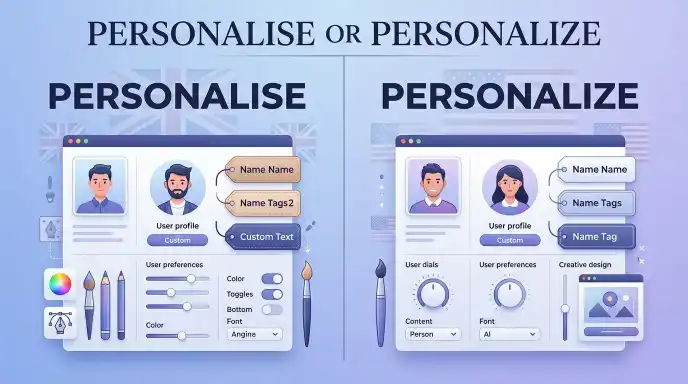
Personalise and personalize are both correct spellings, but the right choice depends on the type of English you are using. Personalize is the standard spelling in American English, while personalise is the usual spelling in British English and is also common in other varieties of English that follow British spelling.
People often search for personalise or personalize because the two forms have the same meaning and pronunciation. The only clear difference is the spelling of the ending: -ise or -ize. This can be confusing when writing for an international audience, especially in schoolwork, business documents, websites, or professional emails.
Both forms mean to make something suitable for a particular person or to make something more personal. For example, you can personalise a message for a UK audience or personalize a message for a US audience.
The choice is mainly based on regional spelling conventions, not meaning. In this guide, you will learn the difference between the two forms, their origin, regional usage, common mistakes, and practical examples.
Personalise or Personalize : Featured Snippet & AI Overview
Personalise is the usual British English spelling, while personalize is the standard American English spelling. Both words have the same meaning: to make something personal or suitable for a particular person. For example, British English personalises your settings, while American English personalizes your settings.
Personalise or Personalize : Quick Answer
The answer depends on your English variety:
- Personalise = British English
- Personalize = American English
- Meaning = the same
- Pronunciation = essentially the same
- Difference = spelling only
Examples
British English:
You can personalise your profile.
American English:
You can personalize your profile.
Another example:
The company lets customers personalise their products.
US version:
The company lets customers personalize their products.
Both sentences mean the same thing.
Simple Rule
Remember:
UK = personalise
US = personalize
However, the -ize spelling is also accepted in some British style systems. Therefore, British usage is not always limited to -ise. The important point is to follow the spelling style you have chosen and remain consistent.
What Does Personalise or Personalize Mean?
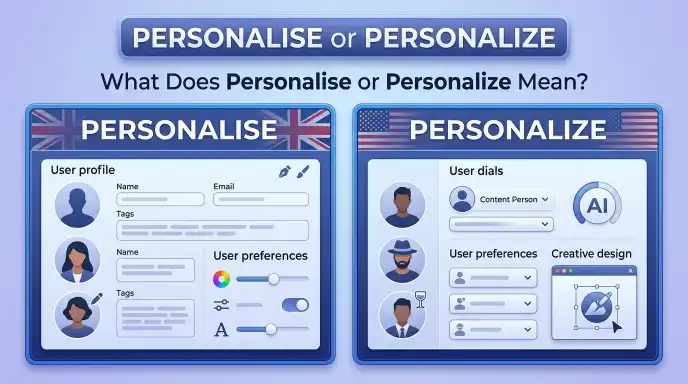
Personalise and personalize are verbs.
They mean to change something so it is more suitable for a particular person or to give something a personal character.
Cambridge defines personalization as changing or adding to something so that it belongs to or comes from a particular person. It also uses the word for making something suitable for an individual’s needs.
Personalise or Personalize an Object
You can use the verb when you change an object to make it personal.
She personalised her notebook with her name.
American English:
She personalized her notebook with her name.
Personalise or Personalize a Service
The word is also common in business.
The company personalises its service for each customer.
American English:
The company personalizes its service for each customer.
Personalise or Personalize Content
The term is now common in technology and digital marketing.
The website personalises content based on user preferences.
US English:
The website personalizes content based on user preferences.
Personalize Can Have Another Meaning
The verb can also mean to make an abstract subject more relatable by using real people or personal examples.
For example:
The writer personalized the story by describing real experiences.
So, the word can relate to customization, individual needs, or personal examples, depending on the context.
The Origin of Personalise or Personalize
The word personalize comes from the adjective personal combined with the verb-forming suffix -ize. Historical records date the verb to around 1747. The form personalise is also recorded from the same period.
The word personal itself has a much older history. It came into English through Old French from Late Latin personalis, meaning relating to a person.
The spelling difference developed from a broader pattern in English:
-ize and -ise
Both endings can appear in English verbs. British English has traditionally used -ise widely, while American English generally prefers -ize.
This creates pairs such as:
- personalise / personalize
- organise / organize
- realise / realize
- recognise / recognize
- apologise / apologize
The meaning does not normally change because of the ending.
Why Does British English Use -ise?
British English commonly uses -ise in everyday publishing and general writing.
At the same time, -ize is also used by some British publishers and style systems. The Oxford style tradition, for example, has historically favored -ize in many words of this type.
Therefore, it is better to say:
Personalise is the usual British form, while personalize is the standard American form.
The difference is mainly one of spelling convention and style preference.
British English vs American English
The clearest regional difference is the ending.
| Meaning | British English | American English | Example |
| Verb | personalise | personalize | Please personalise/personalize your account. |
| Past tense | personalised | personalized | She personalised/personalized the gift. |
| Present participle | personalising | personalizing | They are personalising/personalizing the service. |
| Noun | personalisation | personalization | Personalisation/Personalization improves the experience. |
British English
The -ise form is very common in British English:
Customers can personalise their orders.
The website offers personalised recommendations.
American English
American English normally uses -ize:
Customers can personalize their orders.
The website offers personalized recommendations.
Is -ize Wrong in British English?
Not necessarily.
British English can use -ize in some style systems. The choice often depends on the publication, organization, or style guide.
The important rule is consistency. If your document uses personalise, avoid switching to personalize without a reason.
Which Version Should You Use?
Choose the form that matches your target audience and your chosen style guide.
United States
Use personalize.
Examples:
- personalize your account
- personalized service
- personalization options
This is the normal American spelling.
United Kingdom
Use personalise if you are following the common British -ise style.
Examples:
- personalise your account
- personalised service
- personalisation options
Some British publications use -ize, so always follow the required style guide.
Canada
Canadian English can show variation in -ise/-ize spellings. Your best choice is to follow the style guide used by your school, employer, publisher, or organization.
Australia
Australian English commonly uses -ise forms in general writing.
For an Australian audience, personalise is therefore a natural choice.
International Writing
For a global audience, either form can work.
The best approach is to choose one spelling system and use it consistently throughout the article or document.
Academic Writing
Follow your institution’s required style guide.
If your paper uses British spelling, choose personalise. If it follows American English, choose personalize.
Business Writing
Match your customers and market.
A US-focused company may use personalize, while a UK-focused company may use personalise.
For international brands, consistency across all pages is more important than choosing one form universally.
Common Mistakes with Personalise or Personalize
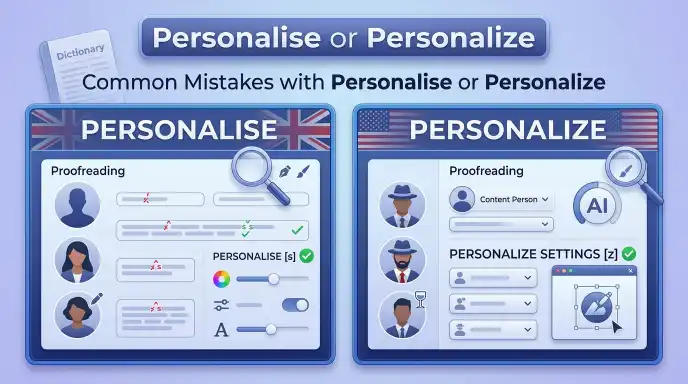
Mixing Both Forms
❌ Our website lets customers personalize their profile, while users can personalise their settings.
This may look inconsistent if the document follows one spelling system.
✅ Our website lets customers personalize their profile, while users can personalize their settings.
Or, in British style:
✅ Our website lets customers personalise their profile, while users can personalise their settings.
Thinking One Form Is Always Wrong
❌ Personalise is always incorrect.
❌ Personalize is always incorrect.
Both forms are legitimate English spellings. The correct choice depends on regional style and editorial preference.
Changing the Meaning
The two spellings do not normally have different meanings.
Personalise and personalize both mean to make something personal or suitable for an individual.
Mixing Related Forms
If you choose personalise, keep the related forms consistent:
- personalise
- personalised
- personalising
- personalisation
For American English:
- personalize
- personalized
- personalizing
- personalization
Memory Tip
Use this simple rule:
British = -ise
American = -ize
Think of the final letter:
UK → S
US → Z
Personalise or Personalize in Everyday Examples
The word appears often in technology, marketing, business, customer service, education, and daily communication.
In Emails
British English:
You can personalise your email signature before sending the message.
American English:
You can personalize your email signature before sending the message.
In Business Writing
British English:
Our team can personalise the service to meet your needs.
American English:
Our team can personalize the service to meet your needs.
In News Headlines
New Tools Help Users Personalize Their Online Experience
A British publication may instead write:
New Tools Help Users Personalise Their Online Experience
In Blogs
Five simple ways to personalise your workspace
US version:
Five simple ways to personalize your workspace
In Social Media
Make your profile unique and personalise your settings today!
American version:
Make your profile unique and personalize your settings today!
In Academic Writing
Digital platforms can personalize learning activities for individual students.
British style:
Digital platforms can personalise learning activities for individual students.
In Daily Conversation
You can personalize the wallpaper on your phone.
British English:
You can personalise the wallpaper on your phone.
These examples show that the meaning stays the same, while the spelling changes according to the chosen English variety.
Personalise or Personalize : Google Trends & Modern Usage
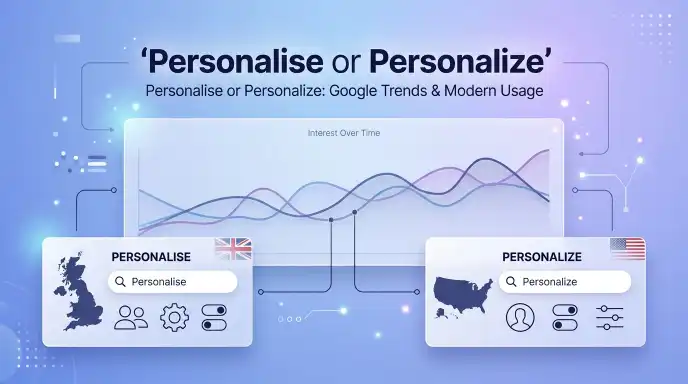
Searches for personalise or personalize usually come from people checking British and American spelling differences.
The word is especially common in modern contexts because personalization is widely discussed in:
- Technology
- Web design
- Digital marketing
- Online shopping
- Customer service
- Education
- Email marketing
- Mobile apps
Cambridge lists personalize as the US form and notes that the UK usually uses personalise.
Why Do People Search This Keyword?
Users may search this phrase because they want to know:
- Which spelling is correct?
- Is personalise British?
- Is personalize American?
- Can I use personalise in the US?
- Can I use personalize in the UK?
- Which form should I use in an essay?
- Is the spelling different in business writing?
Modern Usage
Both forms remain active in modern English.
Personalize is strongly associated with American English.
Personalise is strongly associated with British English and other varieties that commonly use -ise.
Modern digital writing has also increased the use of words related to personalization. Websites, apps, and businesses often talk about personalized content, personalized services, and personalized experiences.
Google Trends and Exact Numbers
Search interest can change by country, time period, and search settings. Without a fixed Google Trends comparison, exact search volumes or country rankings should not be invented.
The general usage pattern is clear: the spelling question is closely linked to British vs American English.
Personalise vs Personalize : Quick Comparison Table
| Version | Meaning | Correct? | Region | Example |
| personalise | Make something personal | ✅ Yes | British English and other -ise styles | Please personalise your profile. |
| personalize | Make something personal | ✅ Yes | American English and some -ize styles | Please personalize your profile. |
| personalised | Made personal | ✅ Yes | British English | She received a personalised gift. |
| personalized | Made personal | ✅ Yes | American English | She received a personalized gift. |
| personalisation | Act of making something personal | ✅ Yes | British English | Personalisation improves the service. |
| personalization | Act of making something personal | ✅ Yes | American English | Personalization improves the service. |
Key Takeaways
- Personalise and personalize have the same basic meaning.
- Personalise is the usual British English spelling.
- Personalize is the standard American English spelling.
- Some British style systems also use -ize spellings.
- The difference is mainly regional spelling, not meaning.
- Use one spelling style consistently within the same document.
- Academic writers should follow their institution or style guide.
- Business writers should consider their target audience and market.
FAQs About Personalise or Personalize
Q1. Is personalisation or personalization correct?
Both are correct. The choice depends on the English variety. Personalise is the usual British English spelling, while personalize is the standard American English spelling. Both mean to make something personal or suitable for a particular person. The main difference is the spelling of the final -ise/-ize ending.
Q2. Is it British or American?
Personalise is mainly associated with British English. It is also used in other English varieties that follow British spelling conventions. American English normally uses personalize. The two forms have the same meaning and are pronounced in essentially the same way.
Q3. Is personalize American English?
Yes. Personalize is the standard spelling in American English. It means to change something or adapt it for a particular person. For example, an American writer might say, “You can personalize your profile.” British English commonly uses “personalise your profile.”
Q4. Can I use personalize in British English?
Yes. Personalize can appear in British English, especially in writing that follows an -ize style. Some British publishers and style systems prefer or allow -ize forms. However, personalise is very common in general British usage. The most important rule is to follow the style guide you are using.
Q5. What is the difference between personalise and personalize?
There is usually no difference in meaning. Both verbs mean to make something personal, individual, or suitable for a particular person. The main difference is spelling. Personalise is associated with British English, while personalize is associated with American English.
Q6. Which spelling should I use in an essay?
Use the spelling required by your school, university, teacher, or style guide. If the assignment uses American English, write personalize. If it uses British English with -ise spellings, write personalise. Do not switch between the two forms in the same essay without a clear reason.
Q7. Is personalized or personalised correct?
Both are correct. Personalized is the American English form, while personalised is the usual British English form. For example, an American company may offer a personalized service, while a British company may advertise a personalised service.
Q8. What is the noun form of personalize?
The noun forms also follow the same spelling pattern. American English uses personalization, while British English commonly uses personalisation. Both refer to the act of making something suitable for a particular person or giving it a personal character.
Q9. Does personalize mean customize?
The words can be similar, but they are not always identical. Personalize focuses on making something suitable for a particular person or giving it personal features. Customize often focuses on changing something according to specific preferences or requirements. In many digital and business contexts, the two words can overlap.
Q10. How can I remember personalise vs personalize?
Use this simple memory rule: British English often uses -ise, while American English usually uses -ize. Therefore, write personalise for a common British style and personalize for American English. The key is to choose one spelling system and use it consistently.
Conclusion:
When choosing between personalise or personalize, both forms are correct. The main difference is regional spelling. Personalise is the usual British English form, while personalize is the standard American English form. Some British style systems also accept or prefer -ize spellings, so the exact choice can depend on the style guide.
The meaning does not normally change. Both words mean to make something personal, individual, or suitable for a particular person. You can personalize a website, personalise a gift, or create a personalized service.
For US readers, choose personalization. For a common UK style, choose personalise. Canadian and Australian usage can vary, so checking the required style guide is useful. In academic and professional writing, consistency matters most.
The easiest rule is to remember the endings: -ise for common British style and -ize for American style. Once you choose your English variety, keep the same spelling throughout your document.
Choose your audience, follow its spelling style, and keep your usage consistent.

I’m Nora Ellis, an English language writer passionate about making grammar, spelling, and confusing words easy to understand. I share clear explanations and practical examples to help readers improve their English and use words with confidence.